The Idea That Led to Modern AI
In 2017, eight researchers published a paper called Attention Is All You Need. It introduced the Transformer: a new design for AI that later became central to systems such as ChatGPT. At first, the paper was about translation. Soon, its idea spread much further.
Before this, many language programs read a sentence like a person walking through a tunnel: one word at a time, carrying a little memory forward. By the end of a long sentence, an important word near the beginning could become blurry or disappear.
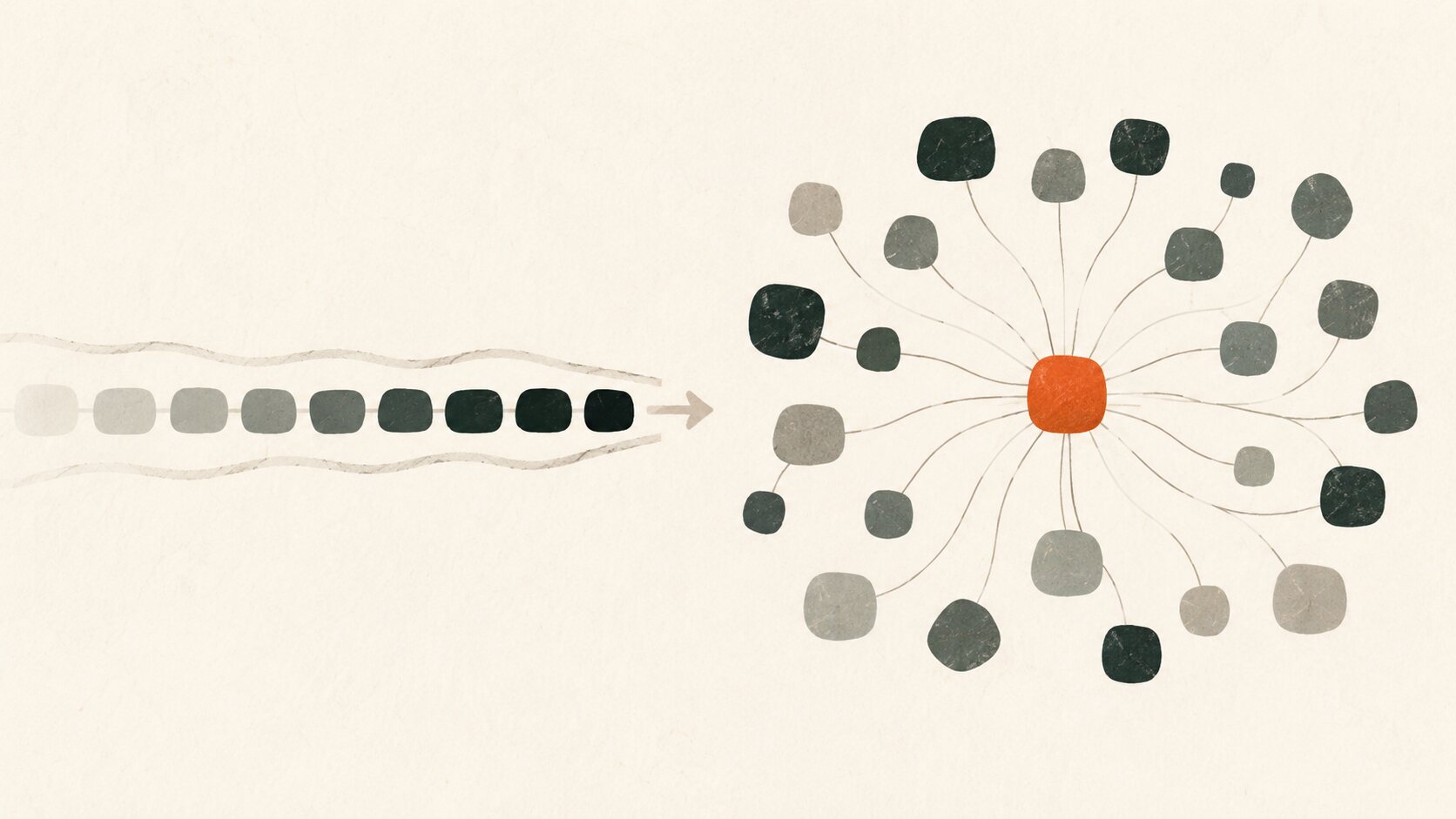
The Transformer changed that with something called self-attention. When it reads an input sentence, each word can look at all the other words and decide which ones matter most. In “The dog chased the ball because it was fast,” the word “it” can pay close attention to “dog” and “ball” before choosing what makes sense.
Attention itself was not completely new. The big step was making an entire model around it, without the older word-by-word machinery. That meant a Transformer could study many parts of a sentence at the same time, which made training faster and made very large models practical.
That is why this paper mattered so much. Modern AI also needs huge amounts of data, powerful chips, and careful training. But the Transformer gave it a simple central habit: before answering, do not look at one word alone. Look at the context around it.