What Is a Qubit?
Every time you send a message, watch a video, or open a game, billions of tiny transistors get to work. A transistor handles one clear choice: 0 or 1. That sounds almost too simple to matter. But put enough of them together, and they can store photos, guide rockets, and run the internet.
A qubit is the basic building block of a quantum computer. It still gives us a 0 or a 1 when we check it. Before that moment, though, it can be prepared in a special mix of both possibilities. That strange rule comes from quantum physics — the rules that describe very small things such as atoms and particles of light.
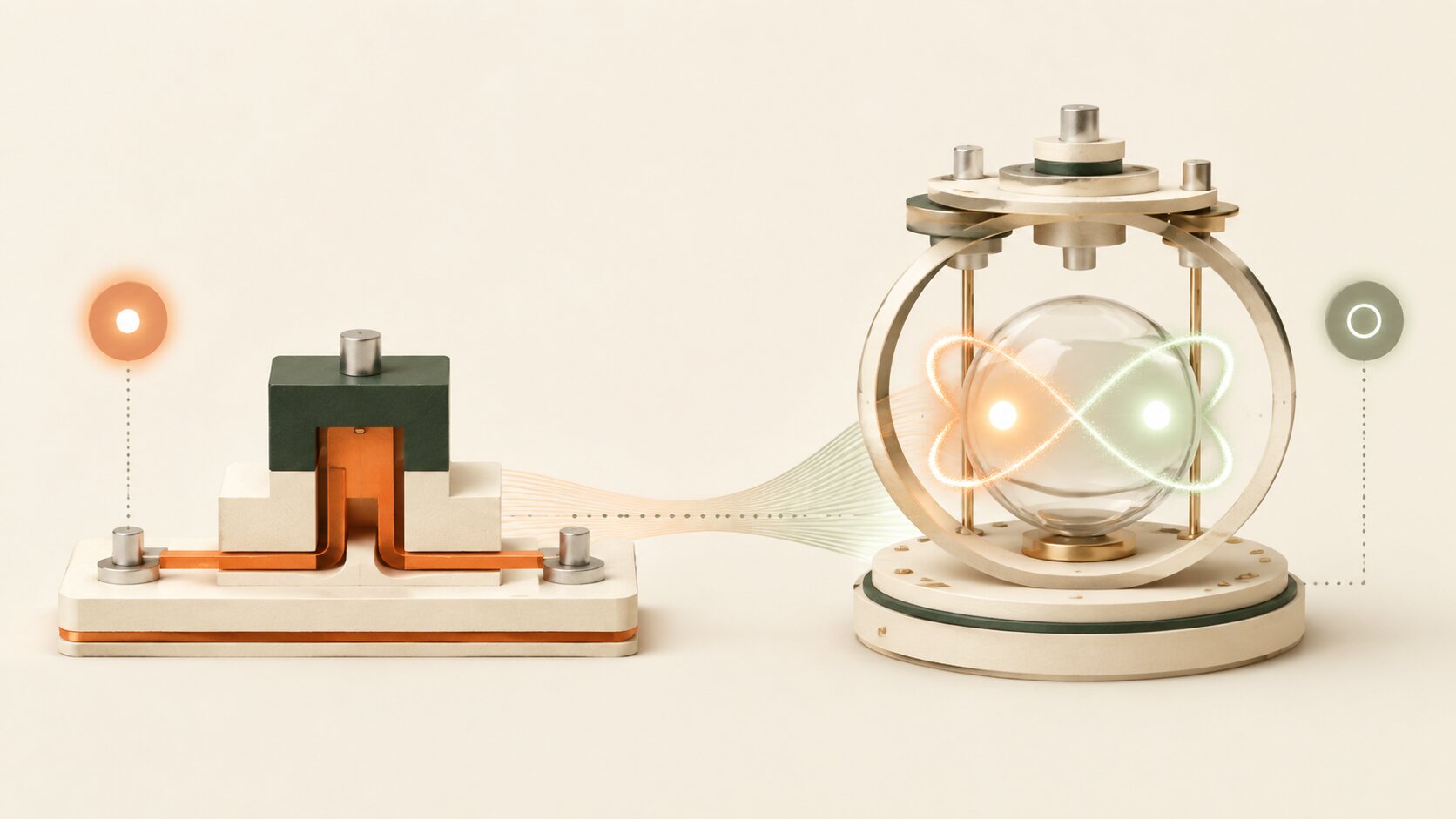
Why would that help? Think about ripples in a pond. When ripples meet, they can make each other bigger or cancel each other out. Quantum algorithms use a similar effect. They guide groups of qubits so patterns linked to useful answers become stronger, while unhelpful patterns fade away. It is not a machine that simply guesses every answer at once.
That is why qubits are exciting — and why they are hard to build. A qubit is easily disturbed by heat, vibration, or tiny signals from the outside world. One small disturbance can ruin the delicate quantum state and give the wrong answer. So today’s machines need extraordinary control, and most of their qubits are still too error-prone for long calculations.
Quantum computers are real, but they are still early machines. Researchers are learning how to combine many physical qubits into one more reliable “logical qubit,” a key step toward useful systems. If that works at large scale, quantum computers may help design new materials and medicines, or solve specialised science problems. The transistor will remain the everyday workhorse; the qubit is a bold new tool for a small set of problems that ordinary computers may never solve well.